
Brown Bomber Leather Jacket vs Brown Bomber Jacket: Is There a Difference?
A brown bomber leather jacket is a leather version of the broader brown bomber jacket category. The shorter name does not mean the jacket is made from fabric. It simply leaves the material unstated. One garment can correctly appear under both descriptions.
That answers the naming question, but it also changes how you shop. Comparing these two phrases as if they were competing styles can send you through dozens of nearly identical listings. A better approach is to decide which material you want, then compare identifiable products rather than search titles.
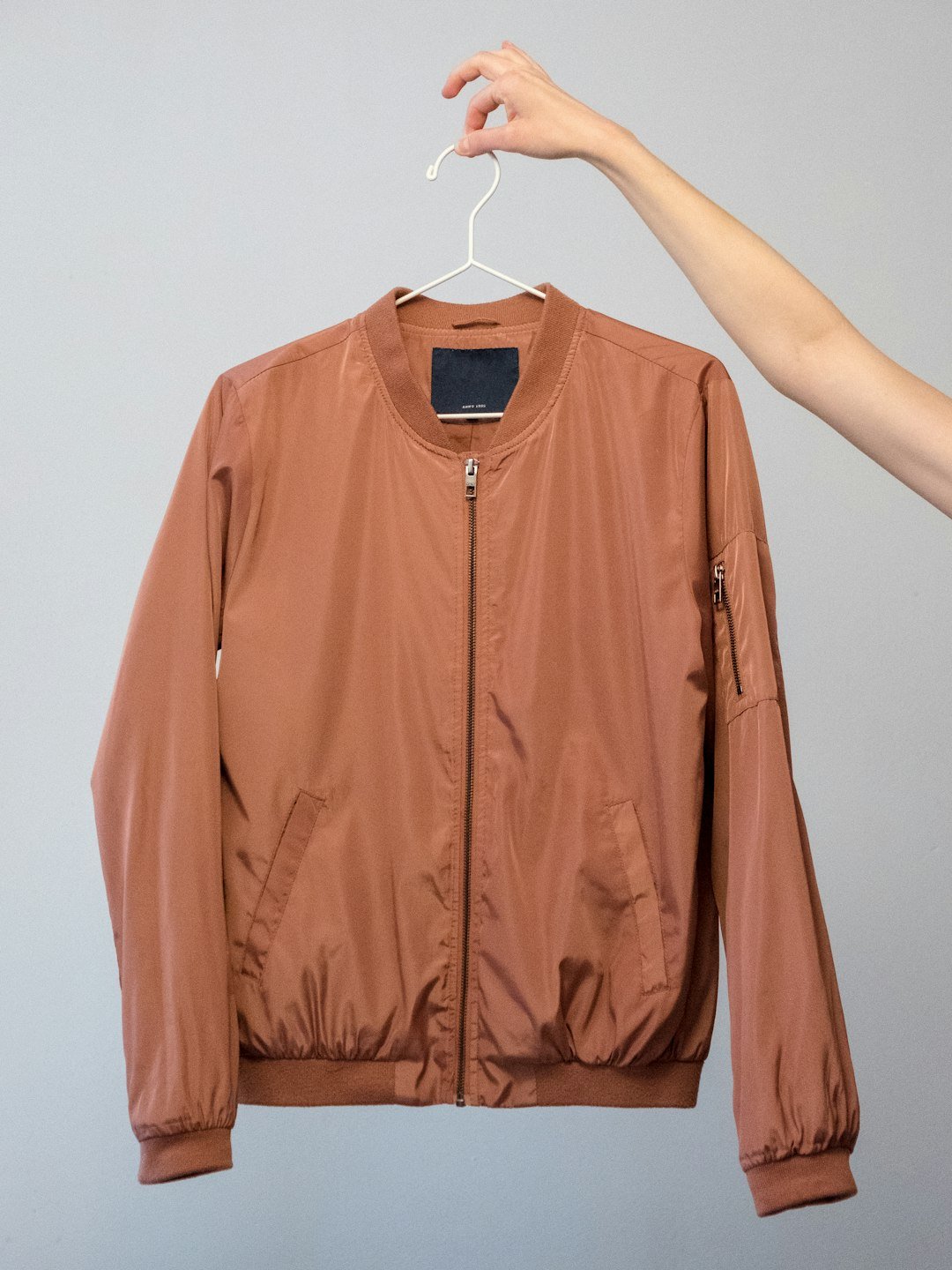
A bomber silhouette reference, not a Leather Porium product. The photograph illustrates the shape; it does not verify fiber composition.
Why the same jacket can have both names
Imagine a store organizing its jackets into a brown outerwear category. A brown leather bomber belongs there, alongside brown bombers made from other materials. Add a leather filter and the selection narrows, but the leather jacket has not changed categories in any contradictory way.
“Brown” identifies a color family. “Bomber” identifies a style family. “Leather” adds a material claim. Omitting the third word makes the description less specific, not automatically different.
The word order also has no special significance. “Brown bomber leather jacket” and “brown leather bomber jacket” can refer to the same item. There is no reason to pay more because a seller uses one ordering instead of the other.
Bomber is a broad retail label, too. A low ribbed collar, gathered waistband, and relatively short body are familiar features, but listings can include variations. For a separate comparison of two bomber silhouettes, see our B3 versus classic bomber guide.
Four listing titles, decoded
These invented examples show how much—or how little—a title tells you. They are not Leather Porium product specifications.
| Example title | Reasonable reading | Still unresolved |
|---|---|---|
| Brown bomber jacket | A brown jacket described as a bomber | The shell material |
| Brown leather bomber jacket | A bomber described as having leather construction | Which sections are leather and the stated material details |
| Brown cotton bomber jacket | A bomber with cotton named in the description | Whether the shell is entirely cotton or a blend |
| Brown bomber jacket with leather trim | Leather is specified for trim | The main shell material |
The last example is especially useful. Leather pocket edging or another leather detail does not establish that the main body is leather. Likewise, a textile lining inside a leather shell does not turn the exterior into a textile shell. Keep each component attached to its own description.
Are you looking at two products or one repeated listing?
Before making a comparison, check the model name, style number, selected color, and seller. Two pages with different headings may be alternate descriptions of one model. Conversely, similar photographs may show different versions.
Start with the retailer’s product identifier when it is provided. A stock-keeping unit, or SKU, can help you distinguish options within that retailer, but different stores may assign different identifiers to the same model. A matching phrase alone proves very little.
Next, check whether the selected size or color changes the displayed details. Product pages sometimes group multiple options together. Save the exact option you are considering, rather than relying on the first picture or a search-result snippet.
If two listings remain unclear, ask: “Are these the same model and construction, or different versions?” That is more productive than asking which title describes the better jacket.
Turn a broad search into a useful shortlist
If leather is a requirement
Include leather in your search, then verify the shell description on the product page. A search engine can return related results that do not meet every word you entered. A leather-like appearance in a thumbnail is not enough.
If avoiding animal materials is your requirement, do the equivalent check in the other direction. Do not assume the shorter phrase “brown bomber” means an animal-free garment; inspect the shell, trim, and other stated materials.
If you are open to several materials
Begin with the broader brown bomber search. Keep separate groups for clearly specified leather shells, clearly specified textile shells, and unresolved listings. This prevents a page with missing information from quietly becoming your benchmark.
Within the textile group, cotton, nylon, and polyester are not interchangeable descriptions. Record what the seller actually states, including blends where listed. You do not need a complete materials textbook to avoid treating “not leather” as one uniform option.
If you keep finding the wrong shape
Add the feature you care about, such as “ribbed collar” or “straight hem.” Only use details that match your preference. Adding more material words will not solve a neckline or silhouette mismatch.
Once the shortlist is manageable, stop changing search phrases and examine the individual candidates. Reordering the same keywords is unlikely to answer an unresolved product question.
A comparison that separates facts from assumptions
Take two candidate pages and write one sentence about each using this format: “This is a brown bomber with a stated ___ shell, ___ lining, and ___ care instructions.” Leave blanks marked unknown until you have an answer.
For example, one hypothetical option might state a leather shell and specialist cleaning. Another might state a cotton-blend shell and provide a permitted washing method. Those are usable differences. You can decide whether their care routines fit your household without declaring one material universally superior.
For textile options, a fiber-content label and care information can resolve details that a headline omits. The Federal Trade Commission’s textile labeling guide is a reference for understanding fiber-content information in the US. Follow the actual garment’s instructions instead of assuming a fabric jacket is machine-washable.
Do not add conclusions the details do not support. A leather title alone cannot establish warmth, waterproofing, weight, or service life. Nor does the absence of leather establish a lightweight or low-maintenance garment.
Resolve the last unknown before ordering
Use a specific question tied to the exact item: “For this brown color option, what is the main outer shell made from, and is leather used only in the trim?” Include the product link or model number so the reply refers to your selection.
If the answer contradicts the page, request clarification before purchasing. Keep the response with your order information. For US delivery, also check the seller’s stated delivery and return terms for your address; a familiar product name tells you nothing about those arrangements.
At Leather Porium, use the individual item’s details to evaluate your shortlist. If the material is settled but appearance is still the question, our brown bomber finish comparison covers matte, glossy, and distressed surfaces separately.
The distinction worth remembering
“Brown bomber jacket” is the broader description; “brown bomber leather jacket” adds material information. They can name the same garment. Identify the actual model, confirm its shell, and compare the details that affect your purchase—not the order of words in its title.
Frequently asked questions
Does a brown bomber jacket mean a nylon jacket?
No. The phrase leaves the material open. A listing needs separate material information before you can identify nylon, leather, cotton, or another shell.
Is a brown bomber leather jacket a different style from a brown leather bomber?
No difference is established by that word order. Compare the products themselves if their photographs or specifications differ.
Can a leather-trimmed bomber be called a leather bomber?
Do not use a shortened title to infer the main material. If only the trim is described as leather, ask what the shell is made from before treating it as a leather-shell jacket.