
Oxblood sits in the space between deep red, burgundy, and brown. That makes it harder to judge from a product thumbnail than black or a familiar tan. One jacket may look almost brown indoors; another can show a richer red in daylight. If you are considering an oxblood leather jacket, understanding that shift will help you choose a color you will actually wear.
This is a guide to the color itself: how to assess it online, what it does next to common wardrobe colors, and when its character is an advantage. Outfit ideas get a brief mention, but the main decision is whether the shade fits your wardrobe.
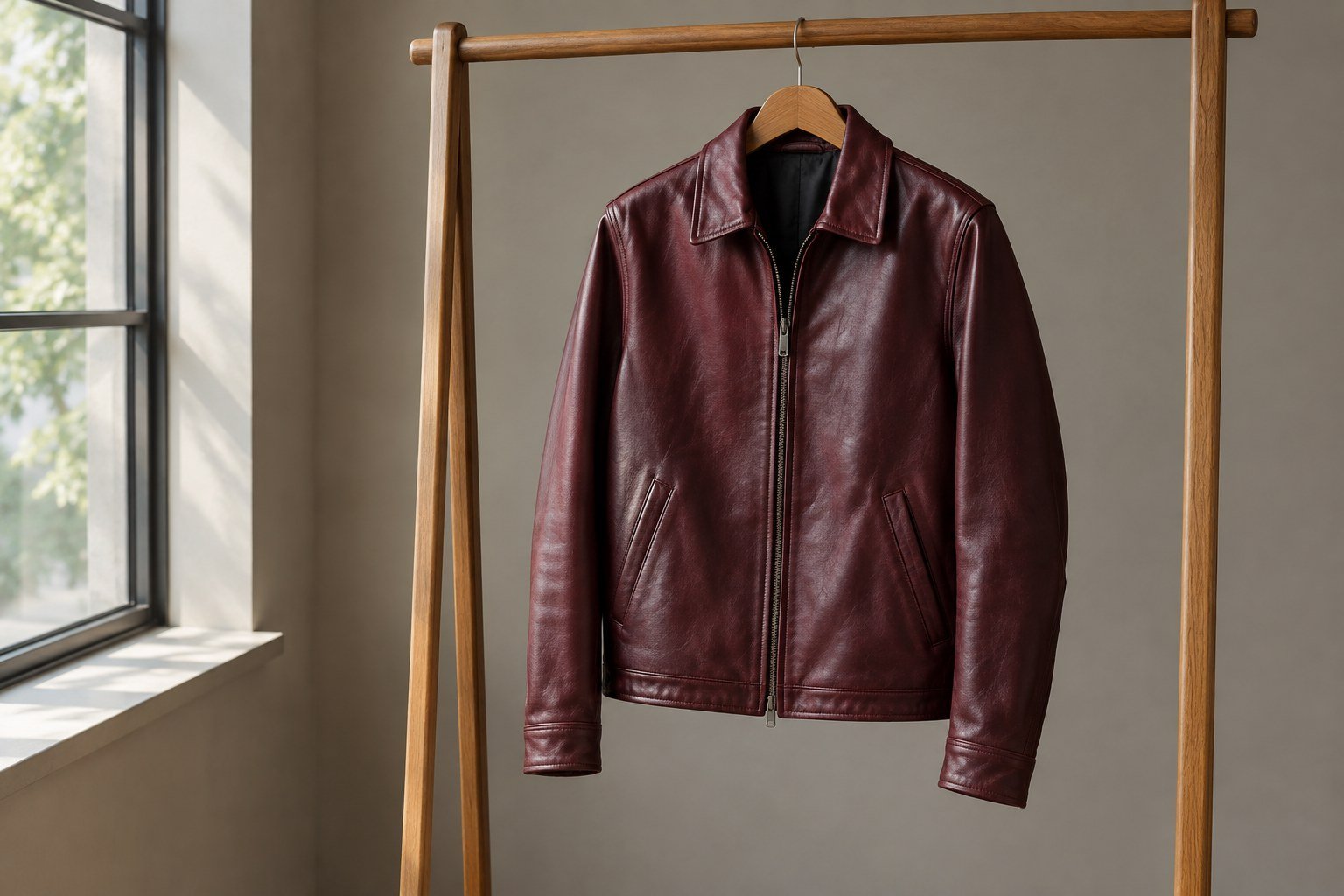
What does “oxblood” mean in clothing?
Oxblood is generally used for a dark, muted red with brown or purple undertones. It is a color description, not a leather grade or a promise about how a jacket was dyed. The exact shade changes from one garment to another. A retailer may call a jacket oxblood, burgundy, wine, or dark red even when the colors look close on a screen.
Look at the photos rather than relying on the color name. A jacket with more brown reads quietly from a distance. A clearer red appears more noticeable in bright light. Neither version is more authentic; the useful question is which one matches the color you want.
Why the same jacket can look different across photos
Light changes how the red and brown parts of a dark color appear. Warm indoor lighting can emphasize brown; direct daylight may reveal red; a phone screen with vivid color settings may make the jacket look brighter than it will in person. Surface finish also affects what the camera captures. A glossy surface can show bright reflections, while a more matte finish may look deeper.
When shopping online, look for several views: a close-up, a full outfit, and a view in a different lighting condition if available. Compare the jacket with a familiar object in the photograph, but remember that camera settings still matter. If precise color is important, ask the seller for a daylight image or a description of the undertone before buying.
How oxblood differs from brown, burgundy, and bright red
A classic medium brown jacket often blends into an earthy palette. Oxblood introduces a visible red element without the brightness of a scarlet jacket. Burgundy may lean cooler or more purple; oxblood often feels warmer or browner, though brands do not use the terms consistently.
Think about the role you want the jacket to play. If you already own mostly black and gray, oxblood can provide a distinct accent without requiring a bright outfit. If you prefer warm tan and olive, a brown-leaning oxblood may feel familiar. If you want the jacket to be nearly neutral, choose a deeper, less saturated shade. These are visual choices, not rules tied to gender or age.
Test the color against your real wardrobe
Before buying, pull out the clothes you wear most often. Hold the product image beside them on your screen, or make a quick list of your three most used pant colors. Dark denim, charcoal, cream, black, and muted olive are useful reference points because they reveal whether the jacket will stand apart or blend in.
- Black and charcoal: Oxblood can add warmth and color to a dark outfit. A very deep shade may look almost black indoors, so check daylight images.
- Blue denim: The red-brown of oxblood usually creates contrast with blue. The effect changes with pale versus dark denim.
- Cream and off-white: Light tops make the jacket’s shade more apparent. This is a good test if you want the color to be visible.
- Olive and tan: These can create an earthy palette, but two muted tones may need a lighter shirt between them for definition.
If you wear bright reds or purples often, compare undertones carefully. Similar colors that are slightly different can look less intentional than a clear contrast.
Decide how much attention you want the jacket to draw
Color and silhouette work together. An oxblood jacket with a simple front may act like a versatile color accent. The same shade in a jacket with an asymmetrical zipper, contrasting trim, and several pockets will naturally draw more attention. Consider the entire garment rather than choosing the color in isolation.
For a first colored leather jacket, try a low-effort test: imagine it over a white tee and dark pants, then over the one outfit you wear most. If both feel plausible, the color may have a useful place in your closet. If you can only picture a special occasion, that may be fine too, but it is a different purchase decision.
What the color name does not tell you
Oxblood says nothing by itself about leather type, thickness, lining, durability, or maintenance. Check the specific product description for those details. Color also does not guarantee a particular fade or patina. Wear and appearance depend on the material, finish, care, and conditions of use.
For care, follow the instructions for the actual jacket rather than using a method because it is oxblood. Test any suitable cleaner or conditioner in an inconspicuous area as directed by its maker. Colored finishes can respond differently, and an unsupported treatment can alter the look you bought the jacket for.
A short checklist before choosing the shade
- Look at at least two images and note whether the shade leans brown, red, or purple.
- Compare it with three tops and two pairs of pants you already own.
- Check whether the jacket’s hardware and cut make the color louder or quieter.
- Read product-specific material and care details; do not infer them from the color name.
- If the exact shade matters, ask for a daylight view before ordering.
Leather Porium may use color names to help organize styles, but the photos and details of the particular jacket are the information to judge. Your screen and lighting can still change your impression.
The appeal of a dark red-brown
Oxblood is useful because it can add color without the visual intensity of a bright red jacket. Its exact effect depends on the undertone, finish, cut, and clothes around it. Take a few minutes to compare those details and you can decide whether you want a quiet dark accent or a more noticeable statement.
Frequently asked questions
Is oxblood the same as burgundy?
The terms overlap. Oxblood often suggests a dark red with brown depth, while burgundy may look cooler or more purple, but retailers use the names differently. Judge the actual shade in photos.
Does an oxblood jacket go with black pants?
It can. The contrast is clearer with a redder jacket or a lighter shirt. Very dark oxblood and black may look almost uniform in low light, which may or may not be the effect you want.
Will an oxblood leather jacket change color over time?
Appearance can change with wear, light, and care, but the outcome depends on the specific material and finish. Do not assume a predictable patina from the color label alone.