
Leather Jacket Zippers and Closures: A Buyer’s Inspection Guide
You should not need a special trick to fasten a jacket you have just bought. Leather jacket zippers and closures deserve a hands-on check: start at the bottom, close the front gently, and notice what happens at the waist, chest, and neck. Then test the smaller fasteners you will actually use.
This guide is a fitting-room and delivery-day inspection, not a repair manual. It helps you describe a problem clearly, distinguish awkward access from a possible fault, and decide what to ask before keeping a jacket.
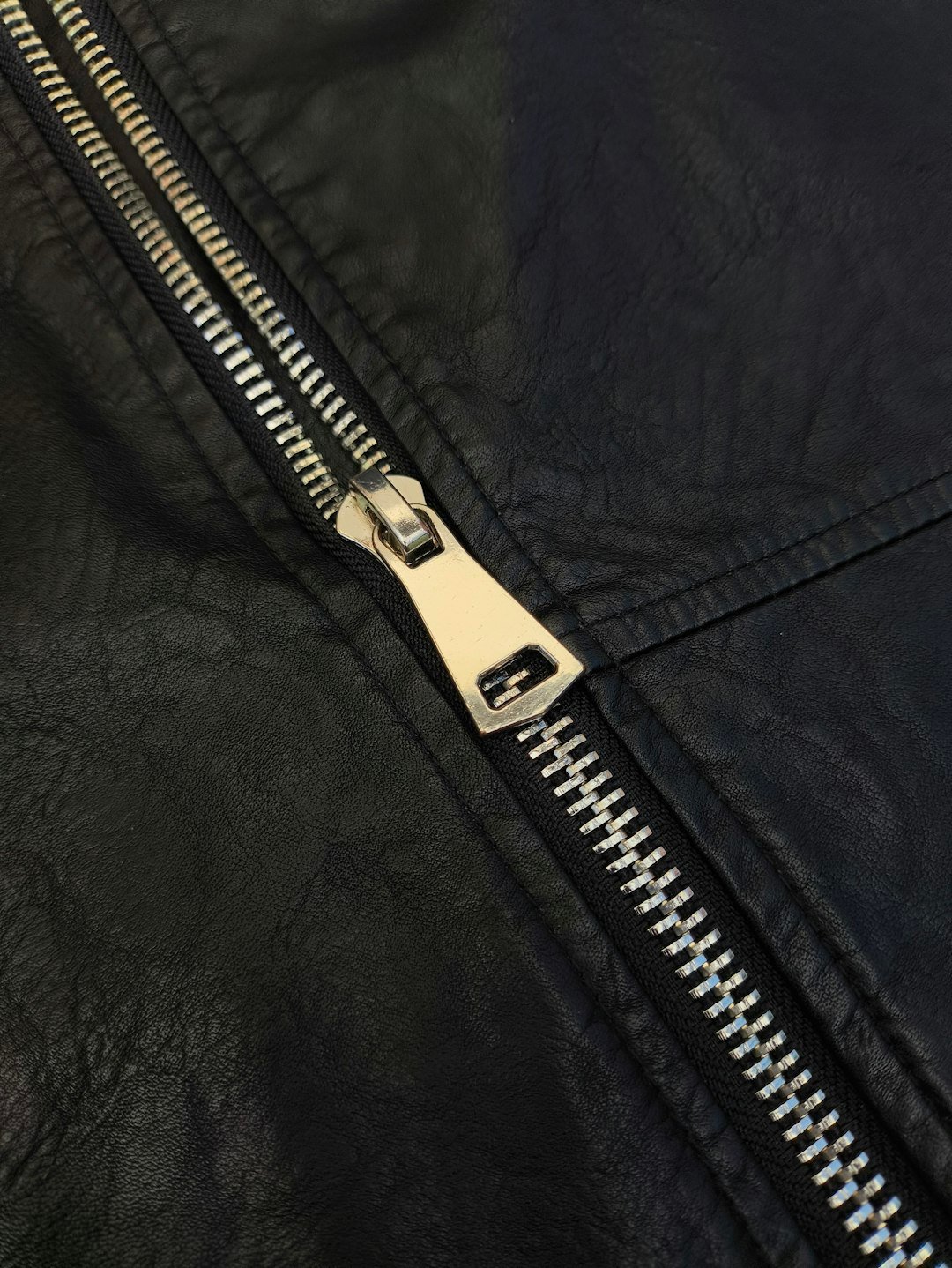
Begin with one ordinary fastening cycle
Try the jacket over the shirt or sweater you expect to wear with it. Stand naturally and bring the front edges together without holding your breath or pulling them hard across your body. Keep loose fabric clear of the zipper path.
Engage the bottom according to the jacket’s instructions, then pull gently along the zipper’s direction. Pause if you feel resistance. Check whether fabric has caught or the bottom has not seated correctly; do not keep pulling to see if the obstruction clears itself.
Once closed, lower your arms and take a normal breath. Sit briefly, stand again, and open the jacket. A single careful cycle often tells you more about everyday use than a close-up photograph of shiny hardware.
Know the parts you may need to describe
The pull is the tab your fingers hold. The slider is the moving part attached to it. The elements—often called teeth—run along the two sides, supported by fabric tape. A separating jacket zipper also has bottom components that let the front open completely.
These names help when contacting a seller. “The pull is difficult to grip” describes a different issue from “the sides separate behind the slider.” The YKK zipper instruction manual includes diagrams of zipper parts and different opening types. Its terminology is useful without implying that any particular jacket uses YKK hardware.
One-way and two-way fronts need different handling
A conventional one-way front opens downward from the top. A two-way separating front has two sliders and can allow an opening from the bottom while the upper portion stays closed. That can be useful when seated, depending on the jacket’s cut and the wearer’s preference.
Do not assume two sliders mean you can start fastening them in any position. Follow the manufacturer’s directions for aligning the sliders and inserting the bottom pin. If the listing is unclear, request a demonstration or instructions. Familiarity with one jacket’s zipper does not guarantee another operates identically.
Separate a fastening problem from a fit problem
If the jacket is difficult to close only while worn, compare that with gentle operation off the body, where practical and permitted. Do not bend the zipper sharply or pull the jacket flat under tension. The aim is to observe a difference, not stress-test it.
A front that works easily off the body but pulls tightly across your chest may indicate insufficient room for you or your chosen layer. A zipper that catches repeatedly at the same point even without tension deserves a closer question for the seller. Neither observation, by itself, identifies the exact cause.
Use our leather jacket fit guide to assess overall room before treating a closure as defective. Sizing up solely to accommodate a troublesome zipper can create other fit problems, so check shoulders and sleeves too.
Check leather jacket zippers where they touch you
At the neck and chin
Close the front to the height you would normally wear. Turn your head gently and look down. Notice whether the top stop, pull, or surrounding edge presses against your chin. A fabric or leather guard may separate hardware from skin, but its presence and placement vary by design.
If you prefer a high neckline, test it fully closed rather than assuming it will feel like an open collar. Neck comfort depends on the collar’s shape as well as the zipper itself.
At the cuffs
Open and close sleeve zippers while wearing the jacket. Check that you can reach them and that the closed cuff is comfortable around your wrist. A watch or sweater cuff may change the result. Do not force a narrow opening over bulky accessories.
Across the seated waist
Sit in a normal chair with the front fastened. Notice whether the bottom hardware presses into your lap or the hem bunches sharply. Try the intended adjustment if the design allows one. Check this while stationary, not while driving or riding.
Give snaps, buttons, and belts their own checks
Snap closures should be tested with the two halves aligned. Support the surrounding material as you open them instead of yanking on a distant panel. Look for obvious looseness or distortion around the attachment point, and ask about anything that seems unstable.
For buttons, check that each passes through its intended hole without excessive effort and stays fastened during ordinary movement. A very tight buttonhole may be frustrating; an overly loose opening may not hold as expected. Avoid trimming threads or modifying a new jacket before discussing a concern.
If the jacket has a belt, try the fastening position you would actually use. Check where the buckle rests when seated and whether the loose end has somewhere to sit. A belt that looks tidy on a hanger may feel bulky under a bag strap.
Record observations instead of guessing at repairs
| What you notice | What to ask or document |
|---|---|
| Repeated catching at one spot | Show the location and whether fabric appears caught. |
| Bottom connection is difficult to engage | Ask for the correct operating sequence for that zipper. |
| Front closes only under strong tension | Describe your layer and fit; ask about garment measurements. |
| A snap turns or shifts noticeably | Send a close photograph and ask whether inspection is needed. |
| Pull is too small for comfortable use | Ask about the design before adding an accessory or altering it. |
For an online order, keep packaging and follow the seller’s inspection and return conditions. A short video of ordinary operation can explain an issue more clearly than “the zipper is bad.” Stop using a closure that visibly separates or appears damaged and contact the seller.
What hardware appearance cannot tell you
A heavy metal pull does not establish how well the whole zipper is installed. A brand name alone does not prove the jacket fits, operates comfortably, or will last a particular number of years. Color and finish are style choices; evaluate function separately.
When browsing Leather Porium, rely on the individual product listing for confirmed closure details. Ask if the front is one-way or two-way, whether cuff zippers open, and whether a pictured snap is functional. Do not infer those features from a distant photograph.
For routine upkeep, follow the garment’s instructions. Avoid improvising with oil, pliers, or household lubricants on a new closure. Our leather jacket care guide covers broader cleaning and storage considerations; a specific hardware fault may need seller or repair-professional advice.
Finish the inspection before deciding
Choose a closure you can operate comfortably in the conditions you expect to use it. A clear fastening cycle, comfortable contact points, and accessible smaller fasteners matter more than how impressive the hardware looks. If something catches, pulls, or shifts unexpectedly, get an answer before trying to fix it yourself.
Frequently asked questions
Should a new zipper need force to work?
No fastening check should rely on force. Stop, check the alignment and instructions, and contact the seller if resistance persists. Do not assume every stiff or catching zipper will improve with wear.
Is a two-way zipper necessary for a leather jacket?
No. It may offer useful adjustment when seated, but preferences and jacket lengths differ. A comfortable one-way front can be entirely suitable for everyday wear.
Can I test the pull while wearing gloves?
Yes, if you expect to use the jacket that way. Try clean gloves during a careful try-on. Check both gripping the pull and engaging the bottom; those are different tasks.