
A well-fitting leather jacket should feel comfortable while keeping its intended shape. But women’s jackets can be more complicated than simply choosing your usual clothing size. The same size can look and feel very different depending on the jacket’s cut, shoulder shape, bust room, waist definition, sleeve length, and hemline.
For winter wear, there is another consideration: you may need enough room for a sweater or other layer underneath without making the jacket look oversized.
Here’s how to evaluate the fit before deciding whether a women’s leather jacket is right for you.
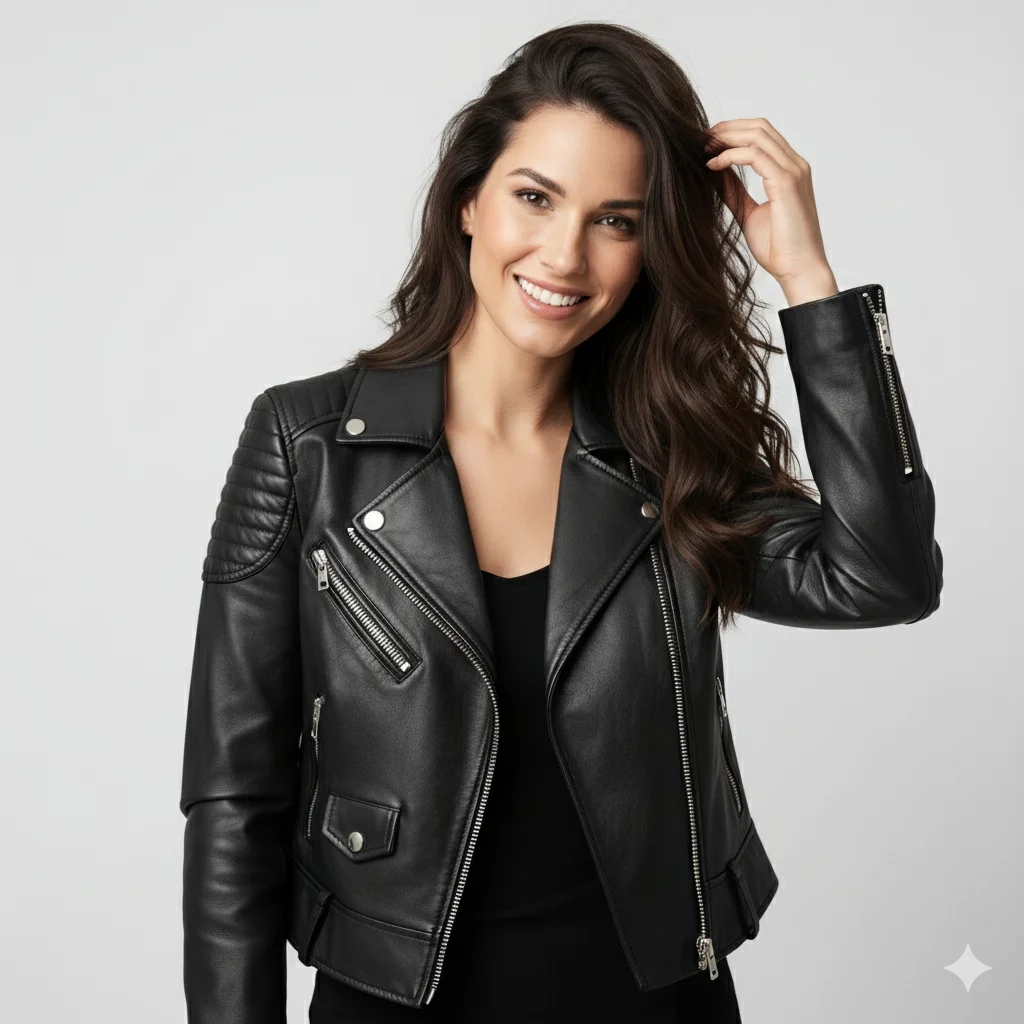
Start With the Shoulder Fit
The shoulders are one of the most important areas to check because leather does not behave like a loose knit or lightweight fabric.
Ideally, the shoulder seam should sit close to the natural edge of your shoulder on a traditionally structured jacket. If the seam sits noticeably beyond your shoulder, the jacket may appear oversized. If it sits too far inward, you may feel restricted when moving your arms.
Try raising your arms, reaching forward, and moving your shoulders naturally.
A useful test: if the jacket feels tight across the upper back or pulls noticeably around the armholes when you reach forward, the problem may be the jacket’s cut rather than simply its overall size.
Some styles are intentionally designed with dropped or relaxed shoulders, so the seam does not always have to sit directly on the shoulder bone. The important thing is whether the silhouette is intentional and the movement feels comfortable.
Check the Bust Area Without Ignoring the Rest of the Jacket
Bust fit is a major consideration in women’s leather jacket sizing.
Zip or button the jacket if it is designed to close that way and check whether the front sits smoothly. Excessive pulling, horizontal tension lines, or a closure that struggles to meet can indicate that the jacket is too small through the chest.
However, buying a larger jacket solely to gain bust room can create another problem: the shoulders, sleeves, waist, and overall silhouette may become too loose.
This is why women’s fit can require more attention to proportions than simply looking at the size label.
What to look for
A good fit should generally allow you to:
- Close the jacket without excessive pulling.
- Move your arms comfortably.
- Wear the type of layer you expect to use underneath.
- Avoid large areas of unnecessary fabric around the torso.
- Maintain the intended shape of the jacket.
If a jacket fits well through the shoulders but is slightly more fitted around the bust, compare its measurements with your own rather than automatically moving up a size.
Pay Attention to the Waist and Silhouette
Women’s leather jackets come in many different silhouettes, and the waist can dramatically change how a jacket looks.
A straight-cut jacket generally falls more evenly from the chest toward the hem. It can offer a relaxed appearance and may provide more flexibility for layering.
A fitted jacket usually follows the shape of the torso more closely. It can create a defined waist but may provide less room for thick winter layers.
A cropped jacket ends higher on the body and changes the visual proportions of an outfit. Its shorter length means the fit around the torso becomes particularly noticeable.
A longer jacket or coat creates a different silhouette altogether and may provide more coverage during colder weather. Our guide to women’s leather long coats explores that style in more detail.
None of these shapes is automatically the correct choice. The right fit depends on the style you want and how you intend to wear the jacket.
Don’t Use Your Regular Clothing Size as the Only Guide
A size medium in one brand does not necessarily have the same measurements as a medium somewhere else.
This is especially important with leather jackets because the garment’s construction can affect how it feels.
Instead of relying only on the label, compare the jacket’s measurements with a jacket you already own and like. For a broader overview, see our leather jacket sizing guide.
For example, lay your existing jacket flat and measure:
- Shoulder width
- Chest width
- Waist width
- Sleeve length
- Overall length
Then compare those measurements with the available sizing information for the jacket you’re considering.
This approach can be much more useful than assuming that your normal sweater, blouse, or coat size will automatically translate to the same leather jacket size.
Sleeve Length Matters More Than You Might Expect
Sleeves should allow natural arm movement without looking excessively long.
For many traditional leather jackets, the sleeve ends around the wrist or slightly beyond it. The ideal length can vary depending on the design, however.
A motorcycle-inspired jacket may have sleeves designed with movement and riding considerations in mind. A cropped fashion jacket may use shorter sleeves as part of its overall styling.
For winter wear, consider what happens when you bend your arms.
If the sleeves become noticeably short whenever you bend your elbows, the jacket may feel uncomfortable during everyday use. On the other hand, sleeves extending significantly over your hands can make a structured jacket appear too large.
Check the Jacket Length Against Your Body Proportions
The hemline affects both comfort and appearance.
A shorter leather jacket can work well with high-rise jeans, trousers, or skirts because the shorter hem changes the visual balance of the outfit.
A longer jacket can provide additional coverage and may be more practical when worn over longer tops or winter layers.
For example, imagine two women wearing the same jacket:
- Someone with a shorter torso may find that a cropped jacket creates a balanced proportion.
- Someone with a longer torso may prefer a jacket with additional length for more coverage.
- Someone planning to wear the jacket over a thick sweater may need extra torso room regardless of body shape.
The goal is not to follow a universal length rule. Look at how the hem interacts with the clothes you actually wear.
Think About Winter Layering Before Choosing Your Size
A leather jacket that fits perfectly over a thin T-shirt may feel completely different over a sweater.
Before choosing your size, think about the temperatures and clothing combinations you expect to use.
If you usually wear thin layers
You may prefer a closer-fitting silhouette, particularly if the jacket is intended primarily for fall or milder winter days.
If you wear sweaters underneath
Allow additional room through the chest, shoulders, and upper arms. The jacket should still maintain its intended shape without feeling restrictive.
If you live somewhere with mild winters
A lighter outfit underneath may mean you don’t need as much extra room.
If you regularly experience colder weather
Consider the entire layering system rather than judging the jacket while wearing only a T-shirt.
The correct amount of room depends on the jacket’s construction, your clothing underneath, and your local winter conditions.
How Different Women’s Jacket Silhouettes Change the Fit
Two jackets can have the same measurements and still create very different looks because of their silhouettes.
Fitted leather jacket
A fitted design follows the body’s shape more closely. Check the bust, waist, and upper-back areas carefully because excessive tightness can become uncomfortable quickly.
Relaxed leather jacket
A relaxed cut provides more room through the torso and can make layering easier. Make sure the additional room looks intentional rather than simply appearing oversized.
Cropped leather jacket
The shorter hem becomes a major part of the outfit. Pay particular attention to where the jacket ends relative to your waist and the rise of your pants or skirt.
Oversized leather jacket
An oversized silhouette is intentionally roomy. In this case, the question is not whether the jacket hugs your body but whether the proportions look deliberate. Shoulder width, sleeve length, and hem placement still matter.
Signs Your Leather Jacket May Be Too Small
Look for several problems rather than relying on one isolated area.
Possible warning signs include:
- The zipper or buttons pull across the bust.
- The upper back feels restrictive.
- Your arms are difficult to move forward.
- Sleeves become uncomfortably short when you bend your arms.
- The jacket feels tight when worn over your normal winter layer.
- Strong tension lines appear around the chest or shoulders.
Leather may soften somewhat with wear depending on the type and construction, but you should not depend on significant stretching to solve an obviously restrictive fit.
Signs Your Leather Jacket May Be Too Large
A jacket can also be too roomy for its intended design.
Watch for:
- Shoulder seams extending substantially beyond the intended shoulder line.
- Sleeves covering much of your hands.
- Excess fabric around the torso.
- A waist that disappears when the jacket is supposed to be fitted.
- A hem that overwhelms the rest of the outfit.
- Excessive room that makes layering unnecessarily bulky.
Again, this depends on the style. An intentionally oversized jacket will naturally have more room than a fitted leather jacket.
A Simple Fit Check Before You Buy
Before purchasing a women’s leather jacket, use this five-step check:
1. Check the shoulders.
Make sure the construction sits where the jacket’s design intends it to sit.
2. Check the bust.
Close the jacket and look for excessive pulling or restriction.
3. Check movement.
Reach forward, raise your arms, and rotate your shoulders.
4. Check the sleeves and hem.
Make sure their lengths work with your proportions and intended outfits.
5. Check your winter layers.
Try the jacket with the sweater or other layer you realistically expect to wear underneath.
This gives you a much better indication of fit than the size label alone.
Choosing a Women’s Leather Jacket at Leather Porium
If you’re browsing the Women’s Leather Jacket collection at Leather Porium, consider the silhouette you want before focusing on the size. A fitted jacket, cropped design, relaxed style, and longer outer layer can all require different expectations around fit.
Use the available sizing information for the specific jacket and compare measurements with a garment you already own when possible. That makes the decision more practical and reduces the temptation to choose a size based solely on the label.
Final Thoughts
The right women’s leather jacket fit is a balance between proportion, movement, comfort, and the intended silhouette.
Start with the shoulders and bust, then evaluate the waist, sleeves, hem, and space for winter layers. Most importantly, judge the jacket according to the way it is designed to look. A fitted jacket should not be evaluated like an oversized jacket, and a cropped silhouette should not be judged by the same length expectations as a long leather coat.
A good fit should allow you to move comfortably while preserving the shape that attracted you to the jacket in the first place.
Frequently Asked Questions
Should a women’s leather jacket be tight or loose?
Neither is universally correct. A fitted jacket should feel close without restricting movement, while a relaxed or oversized design should have intentional additional room. Your planned layers and the jacket’s silhouette should guide the choice.
Should I size up in a women’s leather jacket for winter?
Not automatically. If you regularly wear sweaters underneath, compare the jacket’s measurements with your winter layers. Sizing up can create excess room in the shoulders, sleeves, or waist.
How should a leather jacket fit around the bust?
It should close without excessive pulling or uncomfortable pressure. If the jacket fits well elsewhere but feels restrictive across the bust, compare garment measurements rather than choosing a larger size automatically.
How long should a women’s leather jacket be?
There is no single ideal length. Cropped, waist-length, hip-length, and longer styles create different silhouettes. Consider your proportions, the clothes you wear underneath, and how much winter coverage you want.
Can a leather jacket stretch if it feels tight?
Leather can change with wear, but the amount depends on the leather and garment construction. A jacket that is significantly too tight should not be purchased with the expectation that it will stretch enough to become comfortable.