
Leather Jacket Linings Explained: Comfort Beyond the Outer Shell
A sleeve that pulls your shirt cuff upward, a rough seam beside an inside pocket, or an interior that feels too bulky can matter more during a normal day than the jacket’s exterior. Leather jacket linings deserve their own inspection because they sit between the shell and the clothes—or skin—underneath.
Instead of ranking every lining fiber from best to worst, look at how the interior is built and how it behaves with your usual layers. The goal is a jacket you can put on, move in, and remove without fighting the inside.
Three details a lining description may be mixing together
A listing might use “polyester,” “satin,” and “quilted” as though they answer the same question. They describe different things. Fiber composition identifies the material used to make a fabric. Satin describes a weave. Quilting describes a stitched construction, often involving multiple layers.
Consequently, “satin lining” does not mean silk, and “quilted lining” does not tell you the filling material or its amount. Ask for the missing information instead of assigning a quality level from one appealing word.
| Description | What it helps identify | What else to ask |
|---|---|---|
| Polyester, cotton, viscose, or cupro | Stated fiber composition | Blend percentages and the areas where it is used |
| Satin | A fabric construction | The actual fiber content |
| Quilted | A stitched layered construction | Whether there is filling and what it contains |
| Removable liner | A component designed to detach | Attachment points and the interior left behind |
You do not need all of these features. A clear description is useful because it lets you compare the interiors you are actually considering, rather than imagine that every jacket has the same lining throughout.
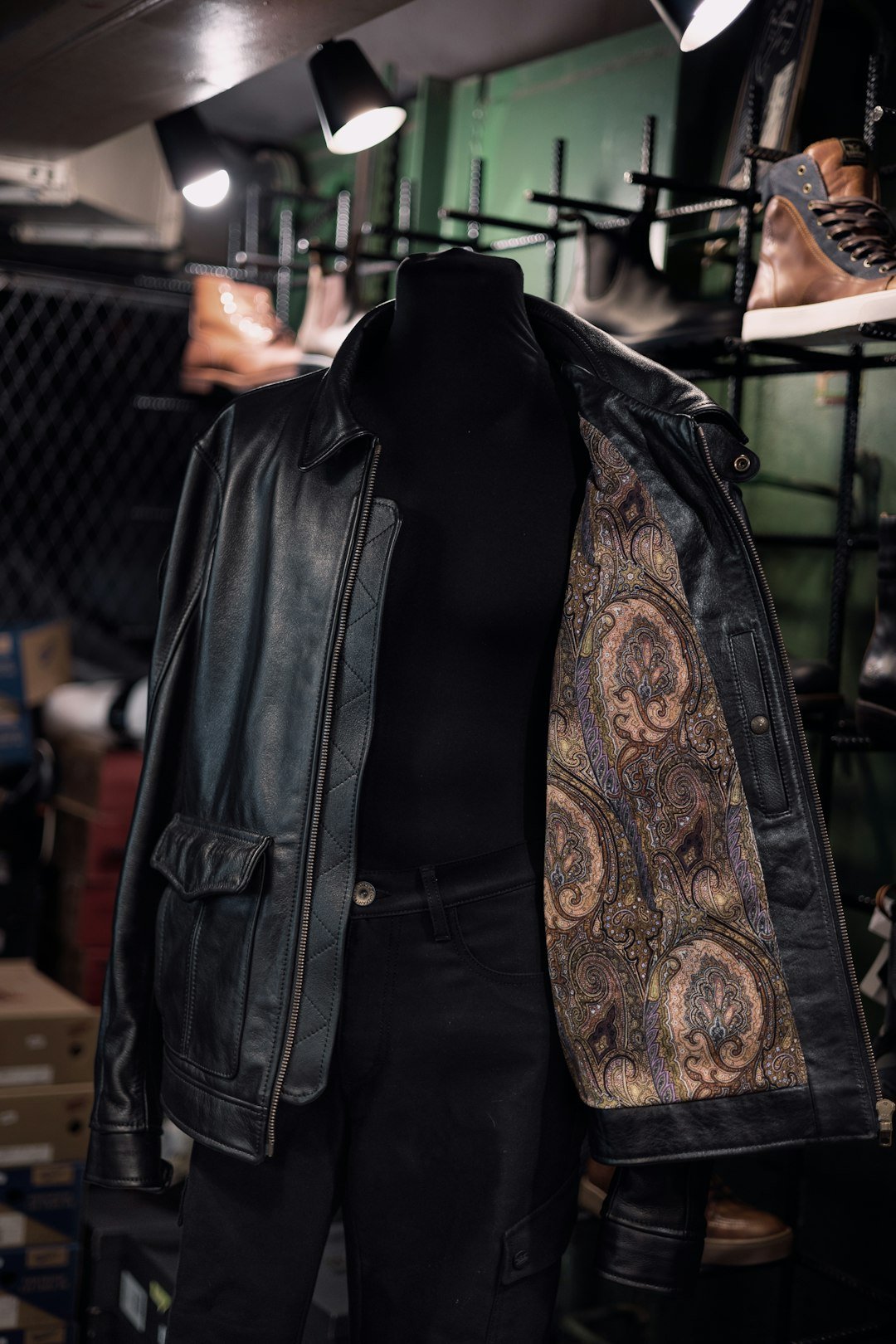
Illustrative interior reference, not a Leather Porium product. The pattern does not identify the lining’s fiber content.
Inspect leather jacket linings in four places
1. Inside the sleeves
Put the jacket on over the shirt or sweater you commonly wear. Notice whether the layer slides through or gathers above your wrist. A sleeve can feel easy over a smooth shirt but awkward over a textured knit.
A smooth lining is often intended to make this movement easier. For a specific example, Asahi Kasei’s Bemberg information describes the low-friction properties of its cupro fiber for sleeve linings. That is a statement about a particular material, not proof that every shiny lining performs identically.
Also check removal. If the lining repeatedly follows your hand out through the cuff, or twists and stays displaced, investigate before accepting it as normal. Do not pull hard on the fabric to force it back.
2. Across the back and underarms
Reach forward naturally, as you would to pick up a light object. The interior should accommodate ordinary movement along with the shell. Some designs include folds or extra allowance in the lining; those should not automatically be mistaken for loose construction.
If you feel a sharp pull inside while the outer jacket seems roomy, the lining may be involved. You cannot diagnose the exact cause from that sensation alone. Ask the retailer or a qualified alterations professional rather than assuming a larger size is the only answer.
3. At pocket openings and seams
Use each inside pocket as intended with a small, ordinary item. Check for a rough edge, an opening that catches your hand, or fabric that gathers awkwardly around the pocket bag. Do this gently and avoid overloading pockets during a fitting.
Inspect visible seams for gaps or loose sections, particularly in a secondhand jacket. A bright patterned interior can make these areas harder to notice at first glance. Good lighting helps you see the construction without stretching it.
4. Along the hem and closures
Open and close the jacket slowly. Check that the lining stays clear of the zipper and sits inside the hem as intended. A small amount of movement is different from fabric repeatedly getting caught.
If there is a detachable liner, try every intended configuration. Inspect exposed attachment points after removal and confirm which parts detach: the body, sleeves, or both. “Removable” does not necessarily mean the remaining interior will feel the same against your clothes.
Read the results of your try-on
Consider three possible outcomes. If the jacket works over a T-shirt but catches over a coarse sweater, the interaction between those surfaces matters. Test the layer you plan to use most often instead of declaring the jacket universally uncomfortable.
If the entire jacket feels tight, including the exterior, you may have a fit issue. Our leather jacket sizing guide covers that broader assessment. A different lining cannot be assumed to solve an unsuitable cut.
If one localized seam feels uncomfortable regardless of the top underneath, inspect that spot. An inside label, seam edge, or construction detail may be responsible. Describe the location to the seller rather than simply reporting that the whole lining is bad.
Lining is not the same as insulation
A thin lining can cover the inside construction and help the jacket slide over other clothes without providing the warmth you associate with a padded winter garment. Conversely, an insulated assembly may include a lining fabric, filling, and other layers that are not visible in a single interior photo.
Ask about the complete construction if warmth is important. Quilt lines, thickness in a photograph, and fiber names do not establish a reliable temperature rating. Climate, activity, fit, and your other clothing also affect comfort.
A jacket used mainly between a car and a heated building has a different job from one worn during a long outdoor wait. Choose for the actual routine. Avoid paying for an interior feature solely because it sounds more substantial.
Care and alterations need the whole garment considered
The lining’s fiber label does not determine how to clean the entire jacket. A textile that could be washed on its own may be attached to leather, trim, or other components requiring different treatment. Follow the garment’s care instructions and seek specialist advice when they are unclear.
For broader upkeep, see our leather jacket care guide. Do not soak the interior or apply an improvised treatment because it looks like the lining of a washable coat.
A damaged lining may be repairable, but the scope depends on its construction and condition. Ask an experienced professional to inspect it and quote before you buy a jacket intending to have it relined. Do not assume that replacing only the visible panel resolves wear elsewhere.
Ask for the interior information you will use
- What are the body and sleeve lining compositions?
- Is there separate insulation or filling?
- Can you show the sleeve interiors, inside pockets, and hem?
- If a liner detaches, which sections come out?
- What care instructions apply to the complete jacket?
Use these questions on the individual Leather Porium product page or with any retailer you are considering. Clear answers and a realistic try-on are more useful than choosing by lining color or a “luxury” label.
Make the inside part of your decision
Leather jacket linings affect the everyday experience of wearing a garment. Inspect sleeves, movement areas, pockets, and closures, then test them with your real layers. The interior deserves the same attention as the exterior before you decide to keep the jacket.
Common lining questions
Does satin lining mean silk?
No. Satin refers to a weave, while silk is a fiber. Check the stated composition rather than inferring it from shine.
Should every part of a jacket use the same lining?
Not necessarily. Different sections can use different materials. What matters is knowing where each is used and whether the complete interior works comfortably for you.
Can a patterned lining be as practical as a plain one?
Yes. The printed appearance alone does not establish comfort or durability. Assess composition, construction, and how the lining behaves in use.