
Leather Jacket Weight: How to Choose One for Everyday Carry and Travel
Your jacket may spend as much time over your arm as on your shoulders during a trip. A short outdoor walk, a warm terminal, and a crowded train can turn an enjoyable outer layer into another item to manage. Leather jacket weight deserves a practical check before you commit to carrying it all day.
You do not need a universal definition of “lightweight.” You need an actual garment measurement, a familiar comparison, and a plan for the moments when you take the jacket off.
Get a usable leather jacket weight measurement
Ask for the weight of the finished jacket in the size you intend to buy. Confirm whether the figure includes a detachable hood, liner, belt, or other removable part. A shipping weight is a different number: packaging and accessories may be included.
Keep comparisons consistent. A small, waist-length jacket and a large, longer version are not equal reference points. Even a measurement from the same model may differ by size. If the retailer only has a sample available, ask which size was weighed.
A useful question is: “What does this jacket weigh in size medium, without packaging, including the liner shown in the photos?” Adapt the size and components to the actual listing. This is more precise than asking whether it feels heavy.
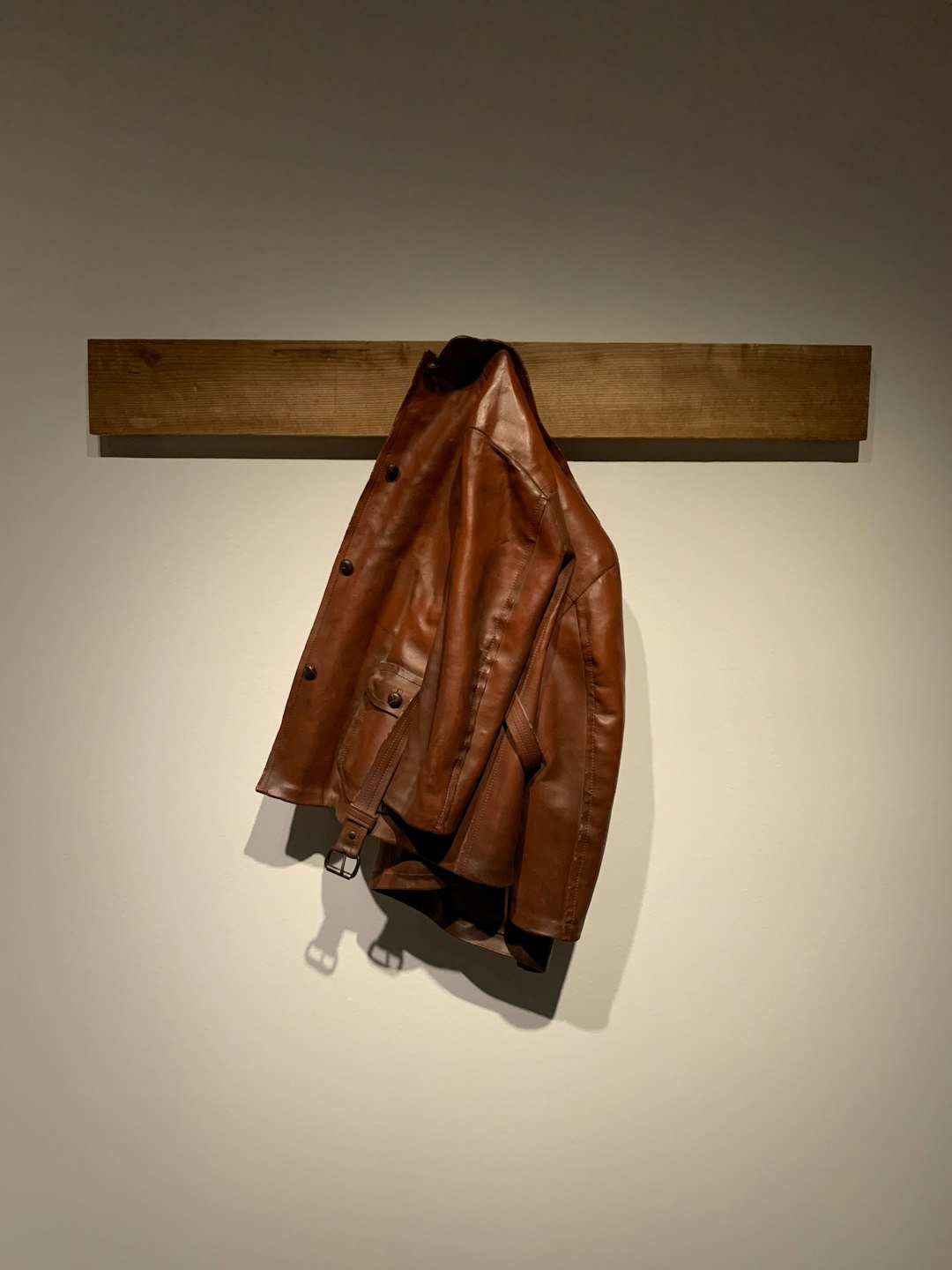
Illustrative jacket reference, not a Leather Porium product. Its weight cannot be determined from the photograph.
Use the jacket you already own as your benchmark
Choose an outer layer you have worn on a long day. Empty its pockets and weigh it on a suitable scale. If you use a kitchen scale, check its capacity and support the garment in a clean container so no part touches the counter. Tare the empty container first.
Repeat the reading to catch an unstable measurement. If your available scale cannot give a reliable result, use a different suitable scale instead of treating a rough estimate as exact.
Now attach experience to the number. Did this jacket feel comfortable worn for an hour? Was it awkward over your arm? Did you avoid taking it because it occupied too much bag space? Those observations make the measurement useful.
For example, suppose a familiar jacket weighs 2 pounds 4 ounces and a candidate weighs 3 pounds. The difference is 12 ounces. That is a hypothetical comparison, not a typical weight range or a recommendation. Whether the extra weight matters depends on how long and how often you carry it.
Separate weight, bulk, and stiffness
These are three different issues. Weight is what the scale measures. Bulk is the space the jacket occupies. Stiffness affects how readily it bends and settles against you or across your arm.
A jacket can be relatively light but bulky because of its construction. Another can occupy less space yet feel substantial in the hand. A photograph or the word “soft” does not settle either question.
| What bothers you? | What to compare | A useful trial |
|---|---|---|
| Carrying extra mass | Finished-garment weight in your size | Carry it alongside your normal loaded bag |
| Running out of space | Volume in your actual bag | Check a gentle, uncompressed placement |
| An awkward shape over your arm | How the garment bends and hangs | Hold it while standing and moving |
| Pulling across the shoulders | Fit and distribution as well as weight | Compare it worn over your usual top |
Do not assume a heavier jacket is better made, warmer, or more protective. Those are separate questions requiring construction or performance information. Likewise, choosing a lighter garment does not automatically mean accepting poor quality.
Rehearse the parts of the day when it is off
A day with several indoor stops
Picture a museum visit followed by lunch and a train ride. You may repeatedly remove the jacket. Try carrying it in one hand while holding your usual bag in the other. Then consider how you will manage doors, a phone, and tickets.
If the arrangement feels cumbersome at home, it is unlikely to become more convenient in a busy station. You might choose a different jacket or simplify what else you carry.
A mostly outdoor day
If you expect to wear the jacket for most of the outing, on-body comfort deserves more attention. Carrying weight still matters during meals and transit, but it may not be the deciding factor. Judge the jacket against the forecast and your intended activity, not a travel label.
A flight with a connection
Plan for the jacket to be off in the terminal or cabin. Wearing it to avoid packing it does not solve the problem if you become uncomfortable and have nowhere to put it. Leave a realistic storage option rather than filling every inch of your bag before departure.
The FAA’s carry-on guidance advises checking your airline’s allowances before packing. Check the current requirements for your itinerary, including any applicable bag weight limit; do not assume a jacket carried separately is treated the same way by every airline.
A simple comparison sheet for two candidates
Record the model, size, empty-pocket weight, included removable parts, and measurement source for each option. Add a short note for worn comfort and off-body handling. Leave unavailable information marked “unknown.”
If you can try both garments, use the same top and the same loaded bag. Compare them on the same day. Switching from an empty tote to a loaded backpack between trials makes it harder to identify what the jacket changes.
- Wear each jacket for several minutes and move normally.
- Take it off and carry it with your usual belongings.
- Check whether it has a practical place in your travel setup.
- Note which part of the routine is uncomfortable or inconvenient.
- Choose based on the routine you actually repeat most often.
If the issue is restricted movement rather than carrying mass, use our leather jacket sizing guide to investigate fit separately. A lighter jacket in an unsuitable cut may still be uncomfortable.
Make the final choice before packing day
At Leather Porium or another retailer, request missing garment information before buying for a specific trip. Read the return conditions early enough to allow an appropriate indoor trial. Do not rely on a material name to predict the finished jacket’s weight.
For packing and storage, follow the garment’s instructions. Avoid forcing it into a tightly packed bag merely to prove that it fits. Our leather jacket care guide provides a separate starting point for routine care.
The best weight for your day is a weight you can manage both worn and carried. One reliable measurement and a short rehearsal tell you more than a vague promise of lightweight comfort.
Weight and travel questions
Is there an ideal leather jacket weight for travel?
No single number suits every traveler. Garment size, your other luggage, how long you carry it, and personal comfort all affect the decision.
Can I compare product shipping weights?
Not reliably as garment weights. Ask whether packaging and accessories are included, and request the jacket-only measurement in the relevant size.
Does breaking in a jacket make it lighter?
Changes in flexibility may affect how it feels, but they should not be treated as a meaningful reduction in garment weight. Choose a weight you can manage from the beginning.